

News & Updates

Wisdom teeth are surgically removed by a dentist for a number of reasons.
Wisdom teeth, which are located at the back of the mouth, sometimes become impacted. This can lead to considerable pain and even infection, in which case they will need to be surgically removed. But how exactly are wisdom teeth removed? Read on to find out what the procedure involves…
What does the surgery involve?
During the procedure, your dentist will administer a local anaesthetic to ensure that you don’t feel any pain when your teeth are removed. Your dentist will then make a small incision in the gum tissue in order to expose the tooth and bone. Once these are exposed, your dentist will carefully remove any bone that is blocking access to the root of the tooth. The tooth will then be removed and if necessary, it may be removed in small pieces, rather than all at once.
When the wisdom tooth has been removed, your dentist will clean the area to ensure that no debris remains. In some cases, the incision will be stitched closed, although this is not always necessary. Some gauze will be placed over the site of extraction in order to control any post-surgical bleeding.
Does the procedure hurt?
An anaesthetic will be administered before the procedure begins so you won’t feel any pain or discomfort during the surgery. If you feel anxious about the procedure, you have the option of having IV sedation. IV sedation is administered in small, continuous doses and will make you feel very relaxed throughout the procedure. You won’t feel anything during the procedure, and once the procedure is complete, you won’t have any memory of the treatment occurring.
What can you expect after the procedure? Once your wisdom tooth extraction is complete, you can expect some swelling and bruising, as well as some bleeding and discomfort. Your dentist will advise you on the best ways to manage any pain that you experience.
You will need to stick to soft foods for the first day or so following the treatment. It is best to avoid foods that are hard and chewy as these can irritate the wound and get stuck in the socket.
How can we help?
If your wisdom teeth are causing you pain, we recommend that you come in for a consultation as soon as possible. Wisdom teeth can cause a number of issues, all of which should be dealt with at an early stage to prevent complications from developing in the future. If left unresolved, problematic wisdom teeth can cause damage to nearby healthy teeth and can also affect one’s bite.
When you come in for a consultation, your dentist will discuss any health issues that you have, as well as any medications that you take. It is important that you let your dentist know this information as it could have an effect on your treatment. To find out more about wisdom teeth removal and what the procedure involves, please have a look here.
During the procedure itself, you will be given an anaesthetic to ensure that you don’t feel any pain or discomfort while your wisdom teeth are being removed. If you choose to have IV sedation during your procedure, small doses of medication will be administered through a very small needle in your arm. This will make you feel drowsy and relaxed throughout your treatment
If you would to make an appointment to see us, please get in touch with us here. We look forward to welcoming you to our practice.
For a full list of the treatments we offer, please take a look here.
With special interests in corrective jaw surgery, bone grafting and implantology, Adrian is a valuable member of the OMFS team.
After qualifying in Dentistry with Honours at the University of Melbourne, Adrian went on to complete his specialist training in Oral and Maxillofacial Surgery in 2010. Read on to find out more about his special interests, skills and range of expertise…
Specialist training
After completing his degree in Dentistry and specialist training in Oral and Maxillofacial Surgery, Adrian went on to obtain a medical degree from the University of Melbourne. He gained his specialist qualification and fellowship in Oral and Maxillofacial Surgery from the Royal Australasian College of Dental Surgeons. Following this, he completed additional advanced training in Head and Neck Cancer Surgery at St George’s Hospital in London and the Royal Derby Hospital, which was sponsored by the Royal College of Surgeons in Edinburgh. With an already impressive set of qualifications under his belt, Adrian went on to add a Master’s thesis in Oncology from the University of Melbourne to his repertoire.
Research and academic excellence
While in the process of completing his training, Adrian also lectured and demonstrated in maxillofacial surgery at the University of Melbourne. He also published a number of articles in the scientific literature with a focus on trauma and head and neck oncology. For his research and academic excellence, Adrian has obtained a remarkable nine awards, including the prestigious Foundation of the Pierre Fauchard Academy Scholarship in 2004.
Special interests
With an inspiring number of qualifications and research articles to his name, Adrian has a range of special interests. These include:
Head and neck cancer
In the case of cancer, Adrian is able to perform a number of surgeries, including primary tumour resection, maxillectomy, mandibulectomy, and laryngectomy. For information about oral and maxillofacial pathology, please have a look here.
Corrective jaw surgery
Adrian is fully qualified to perform corrective jaw surgery, which is often an effective means of correcting a severely misaligned bite. To find out what the surgery involves and what you can expect from the recovery, please have a look here.
Bone grafting and implantology
Adrian is experienced in the fields of bone grafting and implantology, two important offerings at the OMFS practice. Some of the implant and grafting procedures that are available at OMFS include bone and soft tissue grafting, the placement of dental implants, implant-supported dentures, All on 4, and zygomatic dental implants. To find out what each of these procedures involves, please have a look here.
Dentoalveolar and wisdom teeth surgery
Oral surgery includes a number of procedures and may be necessary to complement effective growth and development. Particularly complex cases are best treated by an oral surgeon, particularly if the site of surgery is close to a delicate area of the facial structure. To find out about the dentoalveolar and wisdom teeth surgeries available at OMFS, please have a look here.
If you would like to arrange a consultation with Adrian or any of our other surgeons, please don’t hesitate to get in touch. The team at OMFS offers a range of treatments and all of our surgeons are highly qualified and experienced in the field of oral and maxillofacial surgery. For a full list of the available procedures, please have a look here. If you haven’t been to see us before, you can find all the information you need about what to expect at your initial consultation here.
TMJ disorder is fairly common and 4 out of 10 patients will experience it during their lifetime.
This is why at OMFS in Melbourne we know how important it is to treat it effectively. TMJ refers to the temporomandibular joint, one of the most complex joints in the human body, which is where your lower jaw meets the base of your skull on either side of your head. This means that it plays a pivotal role in moving your jaw up and down, side to side and back to front and any other direction for that matter. Because of the fact that it is such a complex cog in the mechanics of your jaw, it can often be the cause of a host of problems in that area as well as your facial structure. From the 4 out of 10 sufferers of TMJ disorder, only one of those four are actually aware that their symptoms are related to TMJ Disorder.
Our team of surgeons are passionate about ensuring that you receive exceptional standards of treatment and care that we hope will deliver optimal outcomes . Compassion, combined with a wealth of experience ensures that you feel valued and understood. Oral and Maxillofacial surgery is an incredibly specialised arm of dentistry and medicine and our surgeons are routinely recognised as some of the finest in their field. Associated with some of the most prestigious teaching hospitals in Australia, our surgeons are supremely skilled at treating a wide range of oral concerns including TMJ disorders.
So What Causes TMJ Disorder?
The causes of TMJ disorder can be a difficult one to answer but it can be caused by the degeneration of the joint in your jaw or through some sort of trauma or injury. This deterioration of the joint can be the result of degenerative disorders including arthritis and even emotional or physical stress. Other factors include clenching and grinding of your teeth as well as the stresses placed on your jaw through a misaligned bite. As we have discussed, pinpointing the direct cause of TMJ disorder can be difficult but our dedicated team of highly trained health professionals are hugely experienced in dealing with these conditions.
Non-Surgical TMJ Treatment
When treating the effects of TMJ disorder your surgeon will most likely recommend that your first treatment option will be non-surgical. During your initial consultation with us, we will carefully assess your medical history and identify your symptoms after which a clinical examination will take place so that your surgeon can inspect your TMJ. We will evaluate the movement of your jaw and listen for any audible clicking or popping sounds. Additionally, blood tests and radio imaging may be used in order to give us a better chance of the precise diagnosis. We may also need to consult with other healthcare professionals so that we can create an effective treatment plan. Fundamentally, non-surgical TMJ treatment adopts an approach that is simple and conservative. This approach employs techniques that include the modification of your diet, helping you to avoid extreme jaw movements, stress management, behaviour modification therapy, physiotherapy, medication and prosthodontic treatment. Stress can also be reduced on the TMJ by using a bite splint while you’re asleep.
Surgical TMJ Treatment
Should the non-surgical TMJ disorder treatments not be successful and you are in chronic pain or dysfunction, then we will start to explore surgical options. No survey is to be taken lightly and we will discuss every aspect of your case before committing to an appropriate procedure. There are a variety of surgical treatments for TMJ disorder, these include arthrocentesis, arthroscopy or open joint surgery, including total joint replacement surgery in the most severe cases. This refers to the washing out of the area and the removal of any inflammatory products and improving the symptoms of pain and locking in your jaw.
To find out more about our TMJ disorder treatments, or to make an appointment, please click here.
Authors: Woods M, Wiesenfeld D, Probert T.
Abstract
A combined surgical and orthodontic technique for management of transverse maxillary deficiencies in mature patients is described and discussed. Special references are made to the surgical release of several circummaxillary articulations to facilitate the use of a fixed expansion device, and to the authors’ addition of an osteotomy below the nasal spine, to ensure that the nasal septum remains independent of the maxillary segments. Indications for the use of this surgically-assisted maxillary expansion technique, and its advantages when compared with segmented surgical expansion, are also presented.
Oral surgery refers to any surgical procedure that involves the teeth, their supporting tissues and bone, or any of the soft tissues of the mouth.
After you have been through oral surgery, such as wisdom teeth removal, exposure of teeth, or surgical removal of a damaged or decayed tooth, we recommend that you rest for the remainder of the day. Also, be sure to avoid hot food and drinks for around two hours after the procedure, especially while your mouth is still numb. Once you begin to feel ready to eat again, it’s important that you maintain a healthy, nutritious diet to aid your recovery. Here are some ideas for a soft, but nourishing eating plan following oral surgery…
Soon after surgery…
After your procedure has been completed, you’ll need to stick to liquids and soft foods while your mouth feels tender and swollen. It is likely that you won’t be able to chew solid foods on the day of your oral surgery, so make sure that you stay hydrated with plenty of water. Incorporate other liquids like fruit and vegetable juices, smoothies, and lukewarm soups. Try to avoid drinking too much sugar and opt for liquids that will keep you nourished.
As your wounds heal…
As your mouth begins to heal, it will become easier to eat small meals. Try and avoid acidic foods like citrus and tomatoes as they could irritate the soft tissues in your mouth. Onions, pepper, and some spices can also cause some discomfort. Stick to a soft diet while you recover to minimise chewing and any potential discomfort it may cause. Make your own soups with soft meat and vegetables and incorporate soft grains like oatmeal into your diet. Mash or puree your vegetables — potatoes and pumpkin work well in this form. As your swelling and tenderness subside, you can start to eat soft rice and pasta, as well as well-cooked vegetables like carrots and spinach. If you crave something sweet, try some well ripened banana, soft baked apples or applesauce, and some fruit yoghurt.
Don’t forget the protein…
A well balanced diet helps aid a speedy recovery, so don’t forget to include all the food groups in your post-operative eating plan. Consume the correct amount of protein by eating soft tofu, scrambled eggs, yoghurt and cottage cheese. If you eat meat, opt for soft fish or very soft stewed chicken or lean beef. Avoid tough meats that could cause you discomfort when chewing and swallowing. For your fix of healthy fats, consider including mashed avocados and nutritious oils like olive and coconut.
Stay away from…
It’s important to remember that your mouth may feel sensitive for a while following oral surgery. For this reason, you should avoid foods that are difficult to chew for around a week after your procedure. This includes tough meats like steak, as well as popcorn, potato chips, crunchy cookies, and crusty breads. It’s also a good idea to avoid spicy foods, as well as alcohol while you recover.
If your wisdom teeth are starting to erupt and are causing you pain and discomfort, or if you have a damaged tooth that needs to be surgically extracted, get in touch with us to arrange a consultation. We will advise you of the best treatment plan to suit your needs. While a dentist can often help, some cases are more complex and may require the assistance of an oral surgeon. We are dedicated to ensuring the very best care for each of our patients and have an experienced surgical team.
After-care is an important part of successful treatment. If you have any questions about what happens after tooth extraction, please feel free to contact OMFS today.
For a full list of the oral surgery procedures that we offer, have a look here.

Jaw pain can cause considerable discomfort, and often affects the ears, teeth, neck and facial muscles.
If you suffer from a tight or stiff jaw, you may also notice clicking and locking, as well as a reduced range of motion in your mouth and jaw. Here’s what could be causing the issue
1. Temporomandibular joint disorders
Temporomandibular joint disorders lead to pain in the jaw joint and surrounding muscles. The disorders can also cause the jaws to lock, as well as pain and tenderness in the ears, jaws and face. You may notice some discomfort when chewing, as well as a clicking or grinding sound.
2. Stress and anxiety
Stress is one of the most common causes of jaw pain. In fact, many people clench their jaw without realising it when they feel anxious, or while they’re asleep. The action of clenching can cause tightness in the jaw, as well as pain that often worsens during chewing and/or talking. Besides clenching, stress can also lead to tension headaches.
3. Teeth grinding
Teeth grinding, also known as bruxism, can be caused by a number of factors, including stress, and orthodontic issues like misaligned jaws and teeth. Teeth grinding can occur inadvertently during sleep or during the day, and can cause a range of uncomfortable symptoms, including headaches, earaches and jaw pain, as well as pain in the face and neck.
4. Arthritis
Both rheumatoid arthritis and osteoarthritis can cause pain in the jaw and surrounding tissues. Rheumatoid arthritis is an inflammatory disorder that affects the muscles and joints throughout the body, including the jaw, while osteoarthritis can sometimes affect the temporomandibular joints.
Have you experienced jaw pain? At OMFS, we offer effective management of conditions relating to the temporomandibular joint. For more information on the treatments we provide, have a look here.
To arrange a consultation, please get in touch with us.
With decades of experience and expertise in oral and maxillofacial surgery, Dr Probert is an integral team of the OMFS team.
At OMFS, we’re proud to have a team of talented, dedicated and highly skilled doctors who are driven to help patients improve their dental health. Dr Timothy Probert is one of the oral & maxillofacial surgeons we have on our staff. Read on to find out about his specialties and areas of focus.
Oral and Maxillofacial Surgery
Dr. Timothy Probert is a specialist in oral maxillofacial surgery, which he started training for in 1995. He achieved his FRACDS (OMS) in 1995 and took up a 12 month post in New Orleans as a Fellow in Oral & Maxillofacial Surgery at the Louisiana State University. Oral and maxillofacial surgery is a special area in dental surgery that deals with more advanced concerns and goals. The surgeon has the training and skill to perform surgery and procedures on the face, mouth and jaw.
Procedures that make up part of oral and maxillofacial surgery include dental implants, lip correction, cleft palate repairs, jaw surgery, jaw reconstruction, removal of wisdom teeth and chin augmentation. Tim’s particular interests include paediatric OMS including cleft lip and palate deformity, dentoalveolar surgery, corrective jaw surgery, bone grafting and implantology for the replacement of missing teeth. These are all areas that bring value to our clients and help them improve their health in a meaningful way.
Dr Probert also has an MBA, which he achieved in 2009 and adds to his areas of expertise and capabilities.
Master of Dental Science
Dr Timothy Probert completed his Master of Dental Science at the University of Melbourne in 1995. This area of study stems from his passion for dental excellence, helping patients achieve better and healthier smiles, and this passion and purpose continues in all the work he does now.
Community Involvement
Dr Probert is also passionate about being a part of the dental and medical community in Australia.
This includes serving as;
- An honorary VMO at the Royal Children’s Hospital
- An Honorary Senior Fellow, Faculty of Medicine, Dentistry and Health Sciences at the University of Melbourne
- A member of the Australian & New Zealand Association of OMS
- A member of the International Association of OMS
- A member of the Royal Australasian College of Dental Surgeons and the Australian Osseointegration Society.
If you’re interested in finding out how Dr Timothy Probert can help you, don’t hesitate to get in touch with our team.
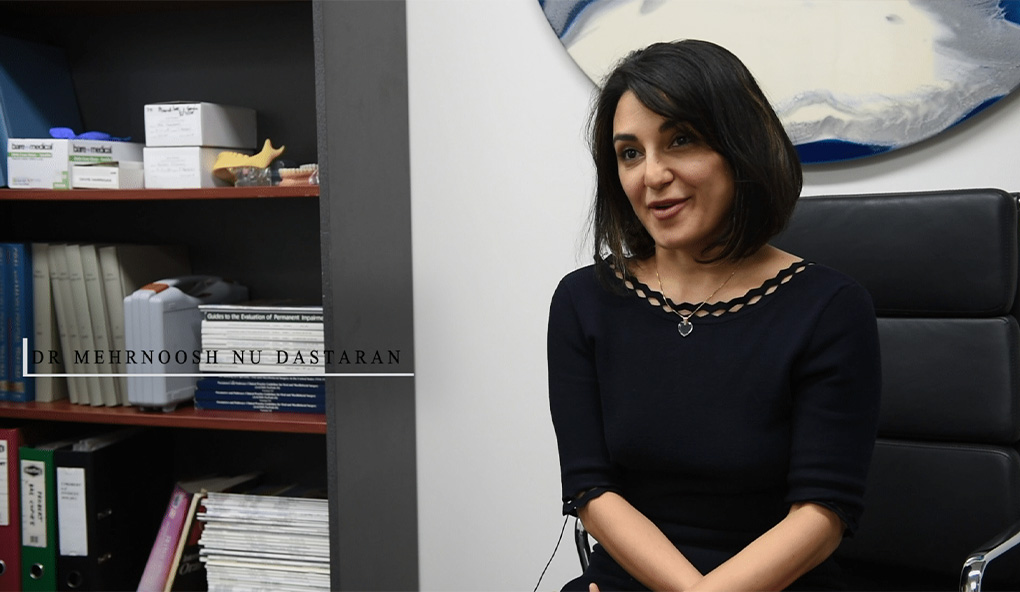
Dr Dastaran practices the full scope of oral and maxillofacial surgery at OMFS in Melbourne.
Dr Mehrnoosh Dastaran graduated from the University of Bristol in 2005, where she studied Medicine, and from King’s College London in 2010, where she completed her degree in Dentistry. Now, she is a valuable member of the OMFS team. Read on to find out more about her qualifications, professional experience and special interests…
Professional experience
Dr Dastaran underwent sub-specialty fellowships in Craniofacial Trauma and Orthognathic Surgery at the Royal Melbourne Hospital after earning her specialist registration. She also completed a fellowship in Craniofacial Surgery and Reconstruction at King’s College Hospital in London.
Besides working as a surgeon at OMFS, Dr Dastaran also plays an active role in undergraduate and postgraduate surgical and dental education at the University of Melbourne. She has performed research together with the Australian Dental Association and has completed a Master of Philosophy in Dental Science by Research in the field of Implantology at the University of Melbourne Dental School. She also works as a Consultant Specialist at The Royal Melbourne Hospital and Royal Dental Hospital of Melbourne.
Special interests
Dr Dastaran provides a wide range of services in her work as a surgeon. She is able to assist with:
Management of impacted teeth
Impacted teeth can cause a number of issues, including infection, tooth decay and damage to nearby teeth and gums. Dr Dastaran is able to recommend and provide treatment for problematic impacted teeth in order to alleviate pain and prevent the development of some serious oral health problems.
Surgical extraction of wisdom teeth
This surgical procedure is fairly common, and is a highly effective means of alleviating pain and discomfort caused by impacted or diseased wisdom teeth. In some cases, Dr Dastaran also removes wisdom teeth for orthodontic reasons. The procedure typically takes between 30 and 60 minutes to complete, and Dr Dastaran will explain what one can expect from the surgery and recovery before treatment begins.
Dental implantology
Dr Dastaran is qualified to perform dental implant surgery, which has become an increasingly popular treatment for the replacement of missing teeth. Dental implants have become an important part of modern dentistry and offer a wide range of benefits, one of the most important of which is that they help to maintain bone structure and support the facial tissues.
Corrective jaw surgery
As an oral and maxillofacial surgeon, Dr Dastaran often performs corrective jaw surgery. The procedure may be recommended in cases where it is necessary to correct a severely misaligned bite, and can go a long way in improving one’s ability to chew and speak.
Minimally invasive salivary gland surgery
This procedure may be recommended for patients who have been diagnosed with salivary gland tumours, in which case, the tumours are surgically removed. When you come in for a consultation with Dr Dastaran, she will let you know what type of surgery suits your particular needs and explain the details of the procedure and recovery to you.
Facial reconstruction following trauma
Dr Dastaran has a special interest in facial reconstruction following trauma, and is qualified and experienced in treating and managing many types of facial fractures and trauma. She is able to assist in the treatment of broken cheekbones, eye sockets, and broken jaws.
Surgical and non-surgical facial aesthetic procedures
Dr Dastaran also specialises in both surgical and non-surgical facial aesthetic procedures, and in her years in the field, she has also gained experience in non-surgical contour correction and anti-aging treatments, including wrinkle relaxation and dermal fillers.
To arrange a consultation with Dr Mehrnoosh Dastaran, please don’t hesitate to get in touch. She is committed to providing top quality care to each of her patients and approaches her work with genuine empathy.
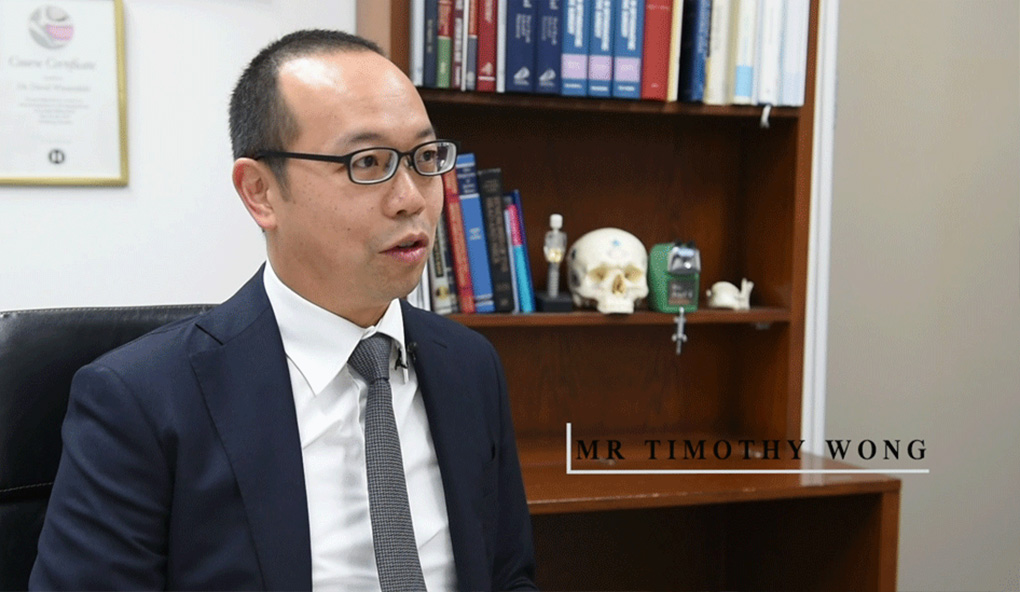
Mr Timothy Wong is a valuable member of the OMFS team.
Mr Timothy Wong completed his medical degree in 2001 before going on to complete his Royal Australasian College of Surgeons Part One in 2004, and then his dental degree in 2007. A keen student, Mr Timothy Wong completed his speciality Oral and Maxillofacial training between 2008 and 2011, as well as a Fellowship in Oral and Maxillofacial Surgery and a Clinical Fellowship in Maxillofacial Head and Neck Surgery. Read on to find out about his special interests in the field…
Corrective jaw surgery
Corrective jaw surgery is one of Mr Wong’s specialities and a procedure in which he is deeply interested. Also known as orthognathic surgery, the procedure is often performed to correct a severely misaligned bite and can go a long way in improving one’s ability to chew and speak. The procedure also has a number of aesthetic benefits.
The surgery itself can take anywhere between one and four hours, depending on the case. When you come in and see Mr Wong for a consultation, he will explain how the procedure works and let you know what to expect from the recovery period. He will also assist you in advice regarding any follow-up care, such as orthodontic treatment, which you may require following surgery.
Implantology
As an oral and maxillofacial surgeon, Mr Wong has a keen interest in implantology. He offers both dental implants and implant supported dentures to patients who are missing teeth or who have severely damaged teeth. He is also able to perform soft tissue grafting in cases where this process is necessary in facilitating the placement of dental implants.
Mr Wong performs a number of implant and grafting procedures, including bone and soft tissue grafting, traditional dental implants, implant-supported dentures, All-on-4 implants and zygomatic dental implants. To find out what each of these treatments involves, please take a look at our implants and grafting page.
Maxillofacial trauma
The treatment of maxillofacial trauma is very important in aiding an effective recovery and is one of Mr Wong’s special interests. He often sees patients who have experienced facial trauma as a result of accidents and is highly experienced in managing these types of injuries, no matter how complex they may be.
As part of his facial trauma treatment, Mr Wong is able to treat broken jaws, as a well as broken cheekbones and eye sockets. In many cases, cheekbone and eye socket injuries actually occur together and may be caused by a range of reasons, including accidents, assaults, sporting incidents and hard falls. Jaw fractures and breaks are fairly common and Mr Wong is able to provide a range of treatments, depending on the unique case. Surgery is sometimes required, in which case Mr Wong will explain the process in detail before beginning treatment.
Management of head and neck tumours
Mr Wong is also interested in the management of head and neck tumours, which can be caused by a number of factors, including congenital conditions, infection and tumours of the soft tissue. In many cases, these types of abnormalities are picked up by a patient’s dentist at a routine check-up and referred to Mr Wong for diagnosis and further management.
Depending on the nature of the abnormality, Mr Wong may recommend treatment in the form of surgery. Mr Wong performs a range of different surgeries, including primary tumour resection, maxillectomy, mandibulectomy, laryngectomy and neck dissection. The treatment that is right for you will depend on your unique situation, and Mr Wong will take the time to discuss and explain your options in detail when you see him for a consultation.
To arrange a consultation with Mr Timothy Wong, please don’t hesitate to get in touch.
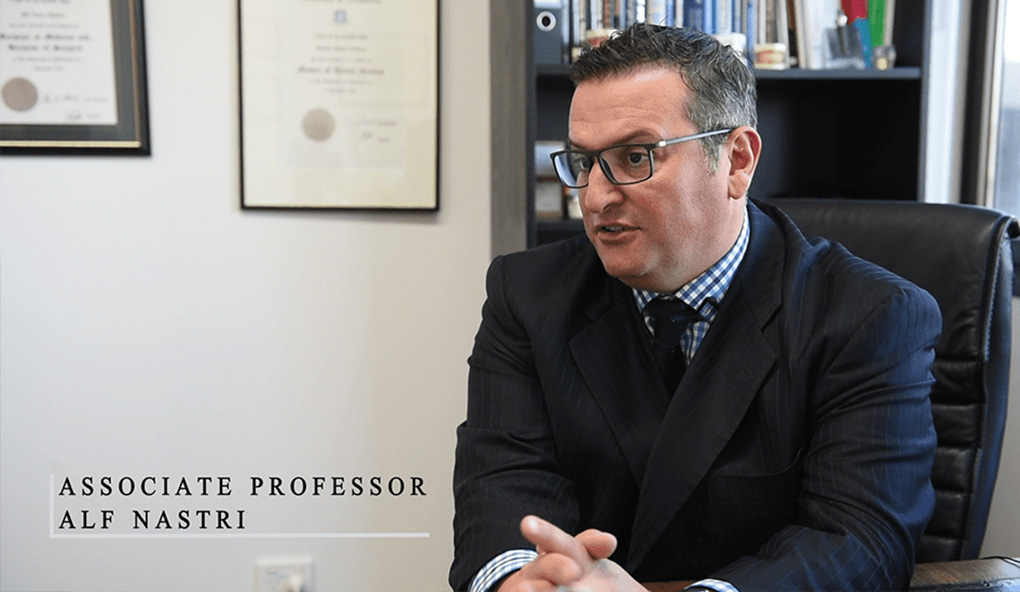
At OMFS, we are proud to have experienced and highly qualified surgeons on our team.
Associate Professor Alf Nastri graduated in both dentistry and medicine from the University of Melbourne before going on to complete four years of speciality training. Read on to find out more about his qualifications and special interests in the field of oral surgery…
Extensive studies and work experience
After doing his speciality training in Melbourne, Professor Alf Nastri completed fellowships at Massachusetts General Hospital at Harvard University in Boston and in Southampton in the United Kingdom. During this time, he specialised in areas of craniofacial surgery, corrective jaw surgery and skull base surgery.
Following his studies and years of fellowships, Associate Professor Alf Nastri went on to work in private specialist practice. He is also the director of OMF Surgery at the Royal Melbourne Hospital, and was recently appointed an associate professor in the faculty of Medicine, Dentistry and Health Sciences at the university.
Special interests
Associate Professor Alf Nastri has a number of special interests. These include:
Corrective jaw surgery
Associate Professor Alf Nastri has a special interest in corrective jaw surgery, which involves procedures that are performed to improve a patient’s ability to chew and speak. Corrective jaw surgery can be completed to resolve a number of concerns, including jaws that are too large, too small, too far forward, too far back or crooked.
Corrective jaw surgery is a specialised branch of oral surgery, and Professor Alf Nastri is highly experienced. To find out what the surgery typically involves, have a look here.
Implantology
Implantology has become an important part of modern dentistry, and Associate Professor Alf Nastri has a special interest in this type of surgery. As part of his implantology services, he offers bone and soft tissue grafting, dental implants, implant-supported dentures, All-on-4 implants and zygomatic dental implants. Each of these restorations offers its own set of benefits, so if you are considering an implant procedure, we recommend that you come in for a personal consultation. Read more about the implant options available here.
Maxillofacial trauma
Associate Professor Alf Nastri has a special interest in the treatment of facial trauma, which includes procedures to repair broken cheekbones, eye sockets, and jaws. In many cases, injuries to the cheekbone and eye socket occur together, and such injuries often occur as a result of accidents. Fractures to the cheekbone and eye socket can, however, be caused by disease and bone loss from infection.
In the case of cheekbone surgery, Associate Professor Alf Nastri will typically make an incision through the hairline in the temple in order to reposition the cheekbone. Sometimes, small plates and screws may be used. To find out more about what the procedure involves, have a look here.
Associate Professor Alf Nastri also treats jawbone breaks and fractures, in which case he often completes a reconstruction with the use of plates and screws. Sometimes, he uses elastic bands, which are attached with metal wires and braces to guide the jaw into position after surgery. To find out more about jaw bone surgery, have a look here.
The management of maxillofacial tumours
Associate Professor Alf Nastri is experienced in the management of maxillofacial tumours, which can be either benign or cancerous. In most cases, these types of abnormalities develop as a result of congenital conditions, infections, soft-tissue growths and autoimmune conditions.
If you are concerned about an abnormality on your face, neck or jaws, Associate Professor Alf Nastri is able to diagnose your condition and, if necessary, perform a removal procedure. Some of the procedures he may recommend include primary tumour resection, maxillectomy, mandibulectomy, laryngectomy and neck dissection. For more about cancers and benign conditions, have a look here.
If you would like to arrange a consultation with Associate Professor Alf Nastri, please don’t hesitate to get in touch.